








Loading tools... Please wait.
Remote work has transformed the way people communicate, collaborate, and manage their daily responsibilities. A Remote Work Productivity Course Online can help professionals develop the practical skills needed to stay organized, focused, and productive while working outside a traditional office environment.
Working remotely offers flexibility, but it also creates unique challenges. Distractions at home, unclear schedules, excessive meetings, communication gaps, and difficulty separating work from personal life can reduce productivity. Learning effective remote work strategies can help professionals build a more structured and sustainable working routine.
Why Remote Work Productivity Skills Matter
Remote employees often have greater control over where and when they work. However, that freedom requires strong self-management and communication skills. Productivity in a remote environment depends not only on completing tasks but also on organizing priorities, communicating effectively, and maintaining accountability.
- Better Time Management: Learn how to organize your working hours and prioritize important responsibilities.
- Improved Focus: Develop techniques for reducing distractions and maintaining concentration.
- Effective Communication: Learn how to communicate clearly with remote teams and managers.
- Digital Collaboration: Understand how online tools can support teamwork and project coordination.
- Work-Life Balance: Create healthier boundaries between professional and personal activities.
What Is Remote Work Productivity?
Remote work productivity refers to the ability to complete meaningful work efficiently while working away from a traditional office. It is not simply about working longer hours. Instead, productive remote workers focus on achieving important outcomes while managing their time, energy, communication, and resources effectively.
A successful remote work routine usually combines clear goals, organized schedules, appropriate technology, regular communication, and effective personal habits.
Key Skills You Can Develop
| Skill | Practical Application |
|---|---|
| Time Management | Plan tasks, deadlines, and working hours effectively |
| Task Prioritization | Identify urgent and high-value responsibilities |
| Digital Communication | Use email, chat, and video meetings professionally |
| Online Collaboration | Work efficiently with distributed teams |
| Self-Discipline | Stay accountable without constant supervision |
| Problem Solving | Handle common remote-work challenges independently |
Creating an Effective Remote Work Routine
A consistent routine can make remote work much easier to manage. Starting the day with a clear list of priorities helps reduce confusion and prevents less important tasks from consuming valuable time.
Professionals can divide their working day into focused work periods, communication periods, and short breaks. A predictable routine also makes it easier to maintain boundaries and finish work at an appropriate time.
Setting Clear Daily Priorities
One of the biggest productivity problems in remote work is having too many tasks competing for attention. Instead of trying to complete everything at once, identify the most important tasks and complete them according to their value and deadlines.
A simple priority system can separate tasks into urgent, important, routine, and optional categories. This makes it easier to decide where your attention should go first.
Managing Distractions While Working from Home
Home environments can contain many distractions, including social media, household activities, television, notifications, and personal responsibilities. Without a clear work structure, these distractions can gradually reduce concentration.
Creating a dedicated workspace, turning off unnecessary notifications, using website blockers, and establishing specific working hours can help maintain focus. It is also useful to communicate your working schedule to family members or others who share the space.
Using Technology to Improve Remote Productivity
Technology is at the center of modern remote work. Project management platforms, cloud storage, video conferencing applications, instant messaging, digital calendars, and document-sharing tools make it possible for teams to collaborate from different locations.
Artificial intelligence can also support productivity by helping users summarize information, generate ideas, organize content, and automate repetitive tasks. Beginners interested in understanding these capabilities can explore a ChatGPT for Beginners Course with Certificate.
AI Tools and the Future of Remote Work
AI is becoming an important part of digital productivity. Remote professionals can use AI assistants to support research, brainstorming, writing, planning, and repetitive workflows.
However, effective AI use requires more than simply asking an AI tool a question. Understanding how to write clear instructions and prompts can improve the quality of results. A Basic AI & Prompt Engineering Masterclass can help beginners understand these concepts and apply them to everyday digital tasks.
Communication in a Remote Team
Remote teams cannot rely on physical proximity to solve communication problems. Messages, emails, meetings, and shared documents therefore need to be clear and purposeful.
Good remote communication means providing enough context, responding within reasonable timeframes, asking questions when information is unclear, and avoiding unnecessary messages. Clear communication can prevent duplicated work and reduce misunderstandings.
Making Online Meetings More Productive
Virtual meetings can be useful for collaboration, but too many meetings can negatively affect productivity. Every meeting should have a clear purpose and, when appropriate, an agenda.
Participants should join on time, remain attentive, avoid unnecessary interruptions, and contribute relevant information. For recurring meetings, a short summary of decisions and action items can help everyone understand what needs to happen next.
Digital Documentation and Organization
Remote teams depend heavily on digital documents. Files should be named consistently, stored in appropriate folders, and shared with the correct people.
Basic web and document skills can also help remote professionals work more efficiently. For those interested in improving their understanding of web page structure, an HTML Course With Certificate Free can provide useful foundational knowledge.
Advantages and Challenges of Remote Productivity
| Advantages | Challenges |
|---|---|
| Flexible working environment | Home and online distractions |
| Less commuting time | Difficulty separating work and personal life |
| Access to global job opportunities | Communication can become more complex |
| Greater control over daily routines | Requires strong self-discipline |
| Easy access to digital productivity tools | Too many notifications and meetings |
Building a Professional Home Workspace
A productive workspace does not need to be expensive. What matters most is having a reasonably quiet, organized, and comfortable area where work can be completed without constant interruption.
Good lighting, a suitable chair, reliable internet access, and an organized desk can improve comfort during extended working sessions. Keeping personal and professional items separated can also create a stronger mental distinction between work and leisure.
Maintaining Work-Life Balance
One of the major challenges of remote work is knowing when to stop working. Because the workplace and home may be in the same location, professionals can easily continue checking emails or completing tasks beyond their intended working hours.
Setting a clear start and finish time, taking regular breaks, and disconnecting from work notifications after working hours can help establish healthier boundaries. Productivity should support a sustainable lifestyle rather than encourage constant availability.
How to Stay Accountable While Working Remotely
Remote workers often have more independence than office-based employees. This makes personal accountability especially important.
Setting measurable daily goals, tracking completed tasks, updating project management systems, and communicating progress with teammates can create a strong sense of responsibility. Managers can also use clear expectations and outcome-based performance measures instead of relying only on visible working hours.
Remote Work Productivity and Cybersecurity
Productivity should never come at the expense of digital security. Remote professionals may access company documents, customer information, business accounts, and other sensitive resources from different networks and devices.
Using strong passwords, multi-factor authentication, secure networks, updated software, and appropriate access permissions can reduce common security risks. Employees should also be careful when opening unfamiliar links or downloading unexpected files.
Useful Habits for Better Remote Performance
- Begin each day by reviewing your most important tasks.
- Keep your workspace organized and free from unnecessary distractions.
- Use calendars and task-management tools to track deadlines.
- Group similar tasks together to reduce unnecessary context switching.
- Schedule short breaks during long periods of focused work.
- Keep communication professional, concise, and clear.
- Review completed work before submitting important deliverables.
- Set a defined time to finish work and disconnect from professional notifications.
Who Should Take a Remote Work Productivity Course?
A remote work productivity course can benefit freelancers, remote employees, entrepreneurs, virtual assistants, digital marketers, customer support professionals, online teachers, software professionals, and business owners.
It can also be valuable for people preparing to enter the remote job market. Learning how to manage time, communicate online, and organize digital work can make the transition to remote employment much smoother.
Remote Productivity for Freelancers and Online Professionals
Freelancers often manage multiple clients, projects, deadlines, and communication channels simultaneously. Without an organized system, it is easy to lose track of tasks or spend too much time on low-value activities.
A structured workflow can help freelancers separate client communication, project work, administration, invoicing, and personal development. This can improve both productivity and the overall client experience.
Measuring Productivity the Right Way
Being busy does not always mean being productive. Checking emails all day, attending unnecessary meetings, or switching constantly between applications can create the appearance of activity without producing meaningful results.
Instead, productivity should be measured through completed outcomes, quality of work, progress toward goals, and effective use of time. This approach encourages professionals to focus on results rather than simply counting hours.
Developing Long-Term Remote Work Skills
Remote work continues to evolve as organizations adopt new communication platforms, automation systems, artificial intelligence, and digital workflows. Professionals who continuously update their skills can adapt more easily to these changes.
According to Microsoft WorkLab, the modern workplace is increasingly shaped by digital collaboration, flexible work models, and emerging AI capabilities. This makes continuous learning an important part of long-term professional development.
Final Thoughts
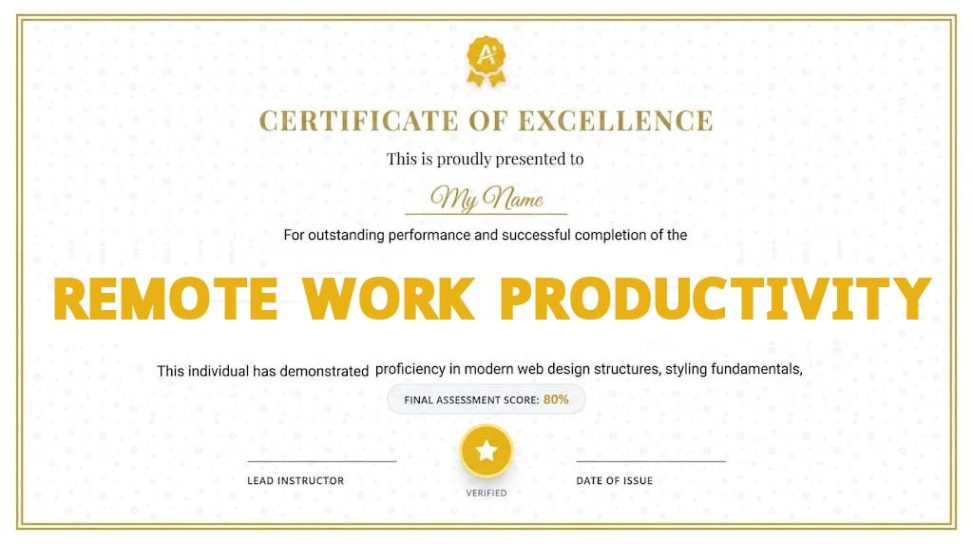
A Remote Work Productivity Course Online can help learners build the practical habits required to work efficiently in a flexible digital environment. From time management and communication to AI tools, online collaboration, cybersecurity, and work-life balance, these skills can improve both professional performance and everyday working experience.
The most effective remote workers are not necessarily those who work the longest hours. They are the professionals who know how to prioritize meaningful work, communicate clearly, use technology intelligently, protect their focus, and maintain sustainable working habits.
Leave a Reply