








Loading tools... Please wait.
An Intermittent Fasting Window Calculator helps you organize your daily eating and fasting schedule based on the fasting method you choose. Instead of manually calculating when to stop eating and when to have your next meal, a calculator can make the process easier and more convenient. Whether you are exploring a 12:12, 14:10, 16:8, or another fasting pattern, understanding your eating window can help you follow a consistent routine.
What Is an Intermittent Fasting Window?
Intermittent fasting is an eating pattern that alternates between periods of eating and fasting. The fasting window is the period when you avoid calorie-containing foods and drinks, while the eating window is the time available for meals. According to Wikipedia’s overview of intermittent fasting, different fasting schedules can be structured in several ways depending on individual preferences and goals.
How an Intermittent Fasting Calculator Works
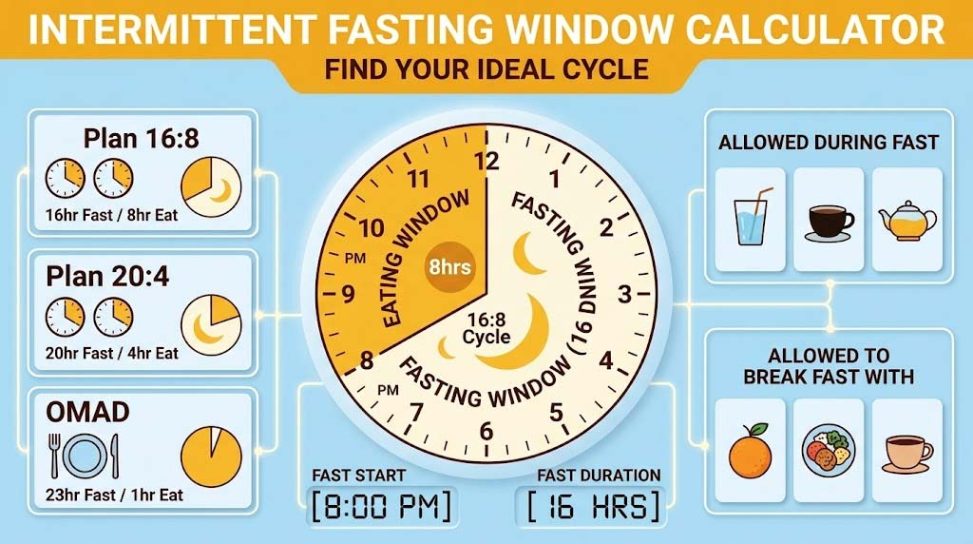
An intermittent fasting calculator generally starts with the time you finish your last meal or the time you want your fasting period to begin. You then select a fasting duration or a preferred fasting-to-eating ratio. The calculator estimates when your next eating window can begin and helps you visualize the schedule across the day.
Key Benefits of Using the Calculator
- Quick scheduling: Calculate your fasting and eating times without manual calculations.
- Better consistency: Keep your daily fasting routine organized.
- Flexible planning: Try different fasting schedules based on your lifestyle.
- Easy time tracking: Clearly understand when your eating window starts and ends.
- Simple routine building: Create a schedule that can fit around work, sleep, and daily activities.
Popular Intermittent Fasting Schedules
There is no single fasting schedule that works for everyone. Some people begin with a shorter fasting period and gradually experiment with longer windows as they become comfortable with the routine.
| Fasting Method | Fasting Window | Eating Window | General Structure |
|---|---|---|---|
| 12:12 | 12 hours | 12 hours | Balanced daily schedule |
| 14:10 | 14 hours | 10 hours | Moderate fasting routine |
| 16:8 | 16 hours | 8 hours | Common time-restricted eating pattern |
| 18:6 | 18 hours | 6 hours | Longer daily fasting period |
Understanding the 16:8 Fasting Method
The 16:8 method divides the day into a 16-hour fasting period and an 8-hour eating period. For example, someone might finish dinner at 8:00 PM and begin eating again at 12:00 PM the following day. The exact timing can be adjusted to match personal schedules.
Choosing a Suitable Fasting Window
Your fasting window should be practical enough to fit your normal lifestyle. Consider your work schedule, sleeping pattern, family meals, exercise routine, and ability to maintain the schedule consistently. Starting with a less restrictive approach may be more practical for people who are new to intermittent fasting.
Why Timing Matters
A consistent schedule can make an eating pattern easier to follow. Instead of making decisions about food throughout the entire day, you can establish a defined period for meals and another period for fasting. However, the quality and overall amount of food consumed during the eating window also matter.
Intermittent Fasting and Weight Management
Intermittent fasting is often discussed as a strategy for weight management because limiting the eating period may help some people reduce overall calorie intake. Research and individual results can vary, so fasting should not be viewed as a guaranteed weight-loss method. For reliable health information, you can also review guidance from Johns Hopkins Medicine on intermittent fasting.
Planning Your Meals Within the Eating Window
An eating window should not simply become a period for consuming large amounts of highly processed food. A balanced routine can include vegetables, fruits, whole grains, protein sources, healthy fats, and adequate fluids. Planning meals in advance can make it easier to maintain a consistent schedule.
Fasting Window and Daily Routine
The best schedule is often the one you can follow realistically. Someone who works late may prefer a later eating window, while another person may find an earlier dinner and morning meal more convenient. The calculator can help you test different start and end times before settling on a routine.
Using Time Calculators for Better Planning
People who work with websites and digital tools may also find other calculators useful for organizing their projects. For example, a Responsive CSS Breakpoint Generator can help developers plan responsive layouts for different screen sizes. These types of tools show how simple calculators and generators can save time in everyday tasks.
Fasting Windows and Digital Productivity
Having a predictable eating schedule may also make daily planning easier. You can coordinate meals with work sessions, meetings, exercise, and rest periods. Just as a clear fasting window provides structure to a daily routine, digital tools can provide structure to creative and technical workflows.
Intermittent Fasting for Beginners
Beginners may find it easier to start with a moderate fasting period rather than immediately choosing a long fasting window. Pay attention to how your body responds and avoid treating fasting as a competition. If you feel unwell, excessively weak, dizzy, or otherwise concerned, stop and seek appropriate medical advice.
Hydration During Fasting
Hydration is an important part of a healthy daily routine. Depending on the fasting method and personal circumstances, water is commonly included during fasting periods, while calorie-containing beverages may affect the fasting period. Individual hydration needs vary, particularly with exercise, climate, age, and health conditions.
Who Should Be Careful With Intermittent Fasting?
Intermittent fasting is not appropriate for everyone. People with certain medical conditions, those taking medications that affect blood sugar, pregnant or breastfeeding individuals, and people with a history of eating disorders should seek professional medical guidance before making significant changes to their eating pattern.
Common Mistakes to Avoid
- Starting with an unnecessarily long fasting period.
- Ignoring hydration and overall nutrition.
- Overeating simply because the eating window is limited.
- Changing the fasting schedule every day without a clear reason.
- Ignoring symptoms that may indicate the routine is not suitable.
Using the Calculator With Other Online Tools
Online calculators are useful because they turn a specific input into a practical result. Designers and developers may use similar tools when building digital projects. For example, a CSS Glassmorphism Background Generator can simplify the process of creating a modern visual effect for a website interface.
How to Build a Sustainable Fasting Routine
Sustainability is more important than choosing the most restrictive fasting schedule. Start with a routine that fits your normal day, keep meal timing reasonably consistent, and make nutritious food choices during the eating period. Over time, you can evaluate whether the routine is comfortable and practical for your lifestyle.
Intermittent Fasting Window Calculator: A Simple Planning Tool
An Intermittent Fasting Window Calculator can remove much of the guesswork from time-restricted eating. By entering a fasting start time and selecting an appropriate fasting duration, you can quickly identify your expected eating and fasting periods. It is a convenient planning tool, but it should complement—not replace—personal medical advice and healthy eating habits.
Final Thoughts
Intermittent fasting can be organized in many different ways, and the ideal schedule depends on individual needs and lifestyle. A calculator makes it easier to understand the relationship between fasting and eating windows and can help you create a more consistent routine. Start gradually, prioritize balanced nutrition, and consult a healthcare professional if you have health concerns or are unsure whether fasting is appropriate for you.
Leave a Reply