






Loading tools... Please wait.
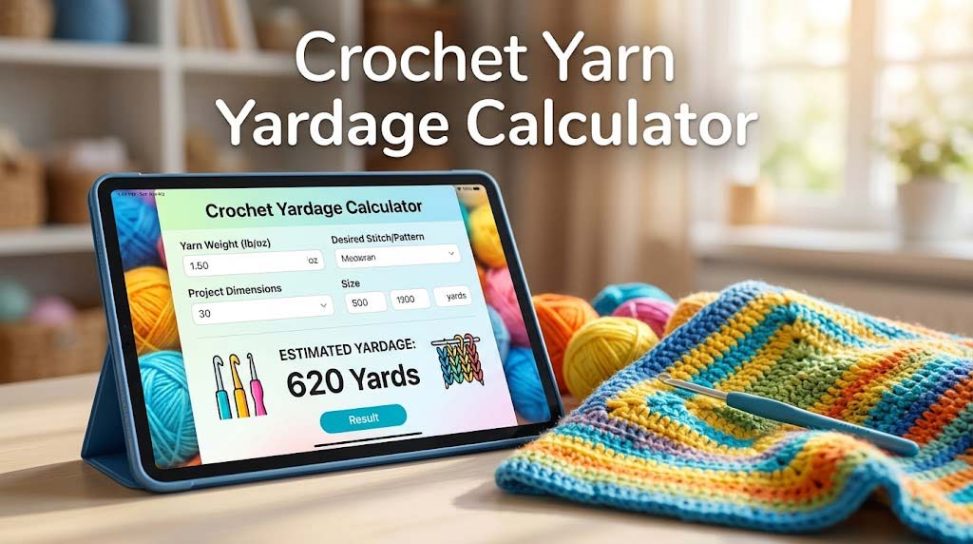
A Crochet Yarn Yardage Calculator is a helpful tool for crocheters who want to estimate how much yarn is needed for a project. Whether you are making a blanket, sweater, scarf, hat, bag, or decorative item, knowing the approximate yarn requirement can help you purchase the right amount and avoid unnecessary waste.
What Is a Crochet Yarn Yardage Calculator?
A crochet yarn yardage calculator estimates the amount of yarn required to complete a crochet project. The calculation can be based on factors such as project size, yarn weight, stitch type, gauge, and the amount of yarn used in a sample.
Because every crocheter works with different tension and techniques, calculator results are generally estimates. Understanding basic crochet terminology and standards can also make yarn calculations easier. The Wikipedia article about crochet provides useful background on the craft and its development.
Why Calculate Crochet Yarn Yardage?
Running out of yarn near the end of a project can be frustrating, especially when the same yarn or color is difficult to find later. Estimating yardage before starting helps you plan your materials more effectively.
- Estimate Yarn Requirements: Determine approximately how many yards or meters your project may need.
- Reduce Waste: Avoid purchasing significantly more yarn than necessary.
- Plan Large Projects: Estimate materials for blankets, garments, and other large designs.
- Compare Yarn Options: Understand how different yarn lengths may affect your project planning.
- Control Project Costs: Estimate the material budget before purchasing yarn.
- Plan Color Changes: Estimate yarn requirements when using multiple colors.
What Information Do You Need?
The accuracy of a yarn estimate depends on the information available. A calculator may use project dimensions, stitch count, gauge, yarn weight, or a known amount of yarn used for a test section.
| Input | What It Means | Why It Matters |
|---|---|---|
| Project Size | Width and length or overall dimensions | Determines the area that must be covered |
| Yarn Weight | Category such as DK, worsted, or bulky | Influences coverage and yardage |
| Gauge | Stitches and rows within a specific measurement | Helps estimate yarn consumption |
| Stitch Pattern | Type and complexity of stitches | Different stitches use different amounts of yarn |
| Yarn Length | Yards or meters available per skein | Helps determine the number of skeins required |
Understanding Yarn Weight
Yarn weight describes the general thickness of yarn rather than its physical weight. Crochet projects commonly use categories such as fingering, sport, DK, worsted, bulky, and super bulky yarn.
Thicker yarn can cover a larger area with fewer stitches, while thinner yarn usually requires more stitches and rows. Standardized yarn information can be helpful when comparing different products. The Craft Yarn Council’s yarn weight standards provide a useful reference for understanding yarn categories.
How Project Size Affects Yardage
The larger the crochet project, the more yarn it generally requires. A small coaster may need only a few yards, while a full-size blanket can require hundreds or even thousands of yards.
For rectangular projects, measuring the desired width and length provides a simple starting point. More complicated shapes require additional consideration because the amount of yarn used may change across the project.
How Stitch Type Changes Yarn Consumption
Not all crochet stitches use the same amount of yarn. Simple stitches may consume less yarn than highly textured or decorative stitches, while stitches with many yarn overs or repeated loops can require substantially more material.
For this reason, two projects with identical dimensions can have different yarn requirements if they use different stitch patterns. A swatch made with the actual stitch pattern can provide a more useful estimate than dimensions alone.
Using a Swatch for Better Estimates
A swatch is one of the most practical ways to estimate yarn usage. Crochet a representative sample using the same yarn, hook, stitch pattern, and tension that you plan to use for the final project.
Measure the sample and record how much yarn it consumed. You can then use that information to estimate the amount required for the complete project.
Why Crochet Gauge Matters
Gauge refers to the number of stitches and rows within a particular measurement. Two people using the same yarn and hook can produce different gauges because their individual tension may vary.
If your gauge is significantly tighter or looser than the pattern’s recommended gauge, your finished project may also require a different amount of yarn. Checking gauge before beginning can therefore improve both size and yardage estimates.
Estimating Skeins From Yardage
Once you know the estimated total yardage, you can determine how many skeins or balls of yarn you need. Divide the estimated project yardage by the amount of usable yardage contained in one skein.
For example, if a project requires approximately 900 yards and one skein contains 300 yards, you would need at least three skeins. In practice, purchasing a little extra can be wise because actual consumption can vary.
Adding a Safety Allowance
It is usually better to have a small amount of extra yarn than to run short. A safety allowance can account for differences in tension, minor calculation errors, swatching, joining, weaving in ends, and variations in the yarn itself.
The appropriate amount depends on the project. Complex designs or projects using discontinued yarn may justify a larger reserve because obtaining additional matching yarn later may be difficult.
Yarn Yardage for Blankets
Blankets are among the projects where yardage planning can be particularly useful. Their large surface area means that a small difference in yarn consumption per square unit can create a significant difference in total requirements.
Before buying yarn for a blanket, consider its finished dimensions, stitch pattern, yarn weight, hook size, gauge, and border design. A sample can make the estimate considerably more practical.
Yarn Yardage for Crochet Clothing
Garments such as sweaters, cardigans, shawls, and dresses require additional planning because their shapes are more complicated than simple rectangles. Size, sleeve length, neckline, shaping, and stitch pattern can all influence the final amount of yarn.
Following a pattern with a specified yarn requirement is often the easiest approach, but a calculator can still help when adapting the dimensions or substituting yarn.
Calculating Yarn for Multiple Colors
Colorwork adds another layer to yarn planning. Instead of calculating only the total amount of yarn, you may need to estimate how much of each color is required.
Keep the colors separate in your calculations whenever possible. This can help prevent a situation where you have enough total yarn but not enough of one particular color to complete the design.
Yarn Substitution and Yardage
When substituting yarn, do not compare products by skein count alone. Two skeins may have very different yardage, even when they have similar weights.
Compare the yarn weight, fiber content, recommended hook size, gauge, and yards or meters per skein. This gives you a better basis for determining whether the substitute is suitable for your project.
How a Yardage Calculator Can Help Small Crochet Businesses
For people selling handmade crochet products, accurate material estimation can help with product pricing and inventory management. Knowing the approximate yarn requirement for each product makes it easier to calculate material costs before accepting an order.
Good teamwork can also become important when a small handmade business grows and multiple people are involved in production, packaging, or customer service. The Workplace Teamwork Basics Course Online Free With Certificate can be useful for developing collaborative workplace skills.
Managing Crochet Orders Efficiently
Organization becomes increasingly important when handling multiple custom crochet orders. Keeping records of yarn purchases, project sizes, colors, customer requirements, production time, and delivery dates can reduce mistakes.
Administrative skills can support this type of organization. The Office Administration Course Online Free is relevant for people who want to improve their general organizational and administrative abilities.
Communicating With Crochet Customers
Custom crochet orders often require clear communication about dimensions, colors, materials, prices, delivery dates, and design changes. Confirming these details before production can prevent misunderstandings.
Professional communication is particularly valuable when discussing custom requirements or explaining why a particular design requires additional materials. The Business Communication Skills Course Online provides a related learning resource for improving professional communication.
Common Yarn Calculation Mistakes
- Estimating yarn only from the project’s physical size.
- Ignoring differences in crochet tension.
- Using a different stitch pattern without adjusting the estimate.
- Comparing skeins by weight instead of yardage.
- Forgetting yarn used for borders, joins, and finishing.
- Failing to account for multiple colors separately.
- Buying the exact estimated amount without a safety allowance.
Tips for More Accurate Yarn Estimates
- Make a swatch using the actual yarn and stitch pattern.
- Record the dimensions and yarn consumption of the swatch.
- Check the yarn label for yards or meters per skein.
- Consider your personal crochet tension.
- Include borders and finishing work in the estimate.
- Add a reasonable amount of extra yarn for safety.
- Keep records of completed projects for future estimates.
Frequently Asked Questions
How do I calculate how much yarn I need for crochet?
You can estimate yarn requirements by considering the project’s dimensions, stitch pattern, gauge, yarn weight, and yarn consumption from a representative swatch. A calculator can simplify these calculations.
Is crochet yarn measured in yards or meters?
Yarn can be listed in either yards or meters depending on the manufacturer and market. Always use the same unit throughout your calculation to avoid errors.
Does a bigger crochet hook use more yarn?
A larger hook can change your gauge, stitch size, fabric density, and ultimately yarn consumption. The actual effect depends on the yarn, stitch pattern, and your tension.
Why should I buy extra yarn?
Actual yarn consumption can differ from an estimate because of tension, stitch variations, pattern modifications, and finishing work. Extra yarn can also be useful if the project requires repairs later.
Can I calculate yarn requirements for crochet blankets?
Yes. Blanket dimensions, stitch pattern, yarn weight, gauge, and border design can all be used to develop an approximate yardage estimate. A swatch usually makes the calculation more reliable.
Final Thoughts
A Crochet Yarn Yardage Calculator makes project planning easier by helping crocheters estimate the amount of yarn required before they begin. While no calculator can perfectly predict the exact amount every project will consume, combining calculator estimates with a proper swatch and yarn-label information can provide a much more reliable starting point.
Whether you crochet for personal enjoyment or sell handmade products, understanding yarn consumption can help you control costs, reduce waste, and avoid running out of materials. With careful planning and good record keeping, you can approach each crochet project with greater confidence.
Leave a Reply