









Loading tools... Please wait.
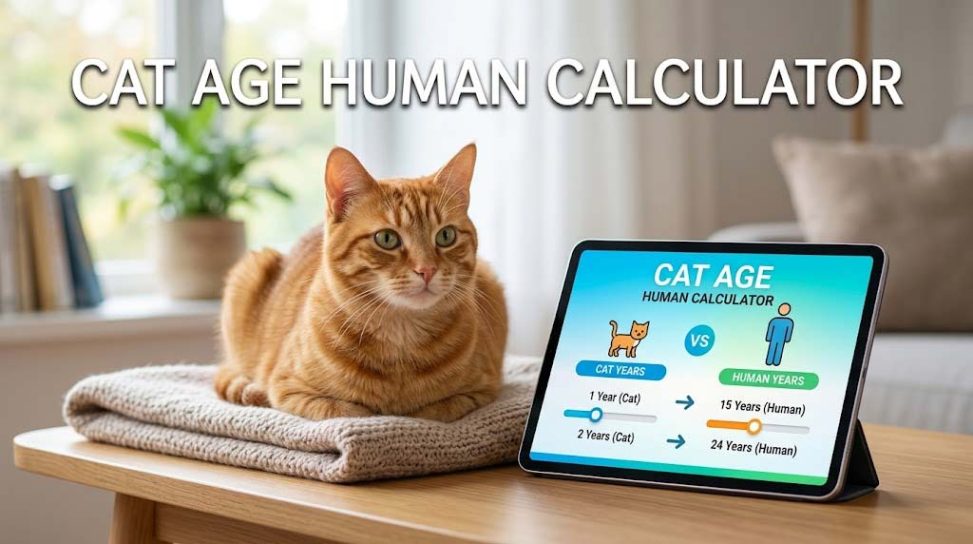
A Cat Age Human Calculator helps you understand how old your cat is in human-age terms. Cats do not age at the same rate as people, especially during their first few years. By entering your cat’s age, you can get a simple estimate that makes it easier to understand its life stage, behavior, care needs, and overall development.
What Is a Cat Age Human Calculator?
A cat age calculator is a simple online tool that converts a cat’s age into an approximate human-age equivalent. Unlike the old idea that one cat year equals seven human years, modern age comparisons consider the much faster development that occurs during a cat’s early life.
For example, a one-year-old cat is already much more mature than a one-year-old human child. You can learn more about feline development and the life stages of cats through Wikipedia’s overview of cats.
Why Use a Cat Age Calculator?
- Understand Life Stage: Find out whether your cat is a kitten, young adult, mature adult, or senior.
- Estimate Human Age: Compare your cat’s development with an approximate human-age equivalent.
- Plan Better Care: Age can influence food, exercise, grooming, and veterinary care.
- Track Development: Monitor how your cat changes as it grows older.
- Support Healthy Aging: Recognize when senior-care considerations may become more important.
How Does Cat Age Conversion Work?
Cats mature very quickly during their first two years. The first year represents a major period of physical and behavioral development, while the second year adds further maturity. After that, each additional year generally represents a smaller but still meaningful amount of human-equivalent aging.
Because individual cats age differently, the result from a calculator should be treated as an estimate rather than an exact biological measurement.
Simple Cat Age to Human Age Chart
| Cat Age | Approximate Human Age | Typical Life Stage |
|---|---|---|
| 6 months | About 10 human years | Kitten |
| 1 year | About 15 human years | Young adult |
| 2 years | About 24 human years | Young adult |
| 5 years | About 36 human years | Adult |
| 10 years | About 56 human years | Mature adult |
| 15 years | About 76 human years | Senior |
| 20 years | About 96 human years | Very senior |
Why the First Two Years Matter
The first two years of a cat’s life involve rapid physical growth, social development, and behavioral changes. A kitten can move from complete dependence to reproductive and social maturity in a relatively short period.
That is why simply multiplying a cat’s age by seven does not provide a useful comparison. A more age-sensitive approach gives a better general picture of the cat’s developmental stage.
Cat Age and Life Stages
Understanding your cat’s life stage can help you make more appropriate daily-care decisions. Kittens usually need nutrition and care that support growth, while adult cats need maintenance and healthy activity.
As cats become older, monitoring weight, mobility, appetite, dental health, and behavioral changes can become increasingly important.
Kitten Stage
The kitten stage is a period of rapid development. Young cats are learning how to interact with their environment, developing coordination, and building social behaviors.
Proper nutrition, vaccinations, parasite prevention, safe exercise, and regular veterinary attention are particularly important during this period.
Young Adult Cat
By around one to two years, many cats have reached physical maturity. Their playful behavior may continue, but their body and behavioral patterns are generally more developed.
This stage is a good time to establish consistent feeding, exercise, grooming, and preventive-care routines.
Adult Cat
Adult cats may appear relatively stable from year to year, but healthy habits remain important. Maintaining an appropriate weight, providing mental stimulation, and monitoring changes in behavior can support long-term wellbeing.
Age-based feeding recommendations can also change as a cat moves through adulthood.
Senior Cat
Older cats may require closer observation because age-related changes can become more noticeable. Changes in appetite, drinking habits, movement, sleeping patterns, grooming, or social behavior should not automatically be assumed to be normal aging.
If you notice a significant or persistent change, discussing it with a qualified veterinarian is a sensible step. Resources from organizations such as the Cornell University College of Veterinary Medicine can also provide useful general information about companion-animal health.
Indoor Cats vs. Outdoor Cats
Living conditions can influence a cat’s health and longevity. Indoor cats may have fewer risks from traffic, fights, infectious diseases, and environmental hazards, although they still need exercise, enrichment, appropriate nutrition, and preventive veterinary care.
Outdoor access can provide stimulation but may also introduce additional health and safety risks. Individual circumstances should therefore be considered when planning a cat’s lifestyle.
Does Breed Affect Cat Aging?
Breed, genetics, lifestyle, nutrition, healthcare, and individual health can all influence how a cat ages. Some cats may remain active well into their senior years, while others may develop health problems earlier.
Therefore, a human-age conversion is best used as a general reference rather than a precise prediction of lifespan or health.
Cat Age and Nutrition
A cat’s nutritional needs can change throughout its life. Growing kittens generally require food formulated for development, while adult cats usually need a balanced maintenance diet.
Senior cats may have different nutritional and medical considerations depending on their health. A veterinarian can help determine an appropriate feeding strategy when a cat has specific health or dietary needs.
Cat Age and Exercise
Age can influence how much and what type of activity a cat prefers. Kittens and young adults often have high energy levels, while older cats may prefer shorter and gentler periods of activity.
Interactive toys, climbing opportunities, scratching surfaces, and play sessions can help provide physical and mental stimulation. Activities should always be appropriate for the cat’s age and physical condition.
Why Cat Behavior Changes With Age
Changes in behavior can occur as cats move from kittenhood into adulthood and later life. A young cat may be highly energetic and curious, whereas an older cat may sleep more and prefer a quieter environment.
However, sudden changes should receive attention. A noticeable behavioral difference can sometimes be associated with an underlying health issue rather than age alone.
Using a Cat Age Calculator for Better Planning
A calculator can give you a convenient starting point for understanding your cat’s approximate life stage. Once you know that stage, you can think about appropriate nutrition, activity, grooming, preventive care, and veterinary checkups.
For people interested in improving professional skills while managing busy schedules, the Remote Work Productivity Course Online offers another example of how structured tools and learning resources can support better daily planning.
Cat Age Calculator and Responsible Pet Care
A calculator is useful, but responsible pet ownership involves much more than knowing an age equivalent. Cats need safe housing, nutritious food, clean water, appropriate enrichment, preventive healthcare, and attention to changes in their physical or behavioral condition.
Age information becomes most useful when it is combined with regular observation and professional veterinary advice when necessary.
How Other Skills Can Support Pet-Related Work
Pet-related websites, online stores, social media pages, and digital businesses often require communication, organization, and professional presentation. Learning how to communicate effectively can be valuable when working with customers, clients, or online communities.
For those interested in improving workplace communication and professional behavior, the Office Executive Etiquette Course provides a related learning opportunity.
Managing Work and Pet Responsibilities
People who work from home may have more opportunities to observe their pets throughout the day, but balancing professional responsibilities with pet care still requires good organization. Creating regular schedules for feeding, play, grooming, and veterinary appointments can make daily routines easier to manage.
Professionals who deal with challenging workplace situations can also explore the Managing Difficult Workplace Employees Online Course With Certificate to develop useful workplace-management skills.
Frequently Asked Questions
Is one cat year equal to seven human years?
No. The seven-year rule is an oversimplification. Cats mature much faster during their first few years, so age conversion should consider different stages of feline development.
How old is a 1-year-old cat in human years?
A one-year-old cat is commonly compared with a human teenager, at approximately 15 human years. This is an estimate rather than an exact biological conversion.
How old is a 10-year-old cat in human years?
A 10-year-old cat is often estimated to be around 56 human years old. Individual aging can vary depending on genetics, lifestyle, health, and veterinary care.
When is a cat considered senior?
There is no single universal age at which every cat suddenly becomes a senior. Many cats are considered mature or senior as they move into their later years, and their care needs should be assessed individually.
Can a cat age calculator predict lifespan?
No. A cat age calculator provides an approximate age comparison and does not predict how long a particular cat will live. Health, genetics, nutrition, environment, and veterinary care all influence longevity.
Final Thoughts
A Cat Age Human Calculator is an easy way to understand your cat’s approximate human-age equivalent and identify its general life stage. Instead of relying on the simple seven-year rule, age conversion considers the rapid development that occurs during a cat’s early years and the gradual aging that follows.
Use the result as a helpful reference, but remember that every cat is different. Regular care, healthy nutrition, safe activity, environmental enrichment, and appropriate veterinary attention are more important than any single age calculation when it comes to supporting a long and healthy life.
Leave a Reply