
Loading tools... Please wait.
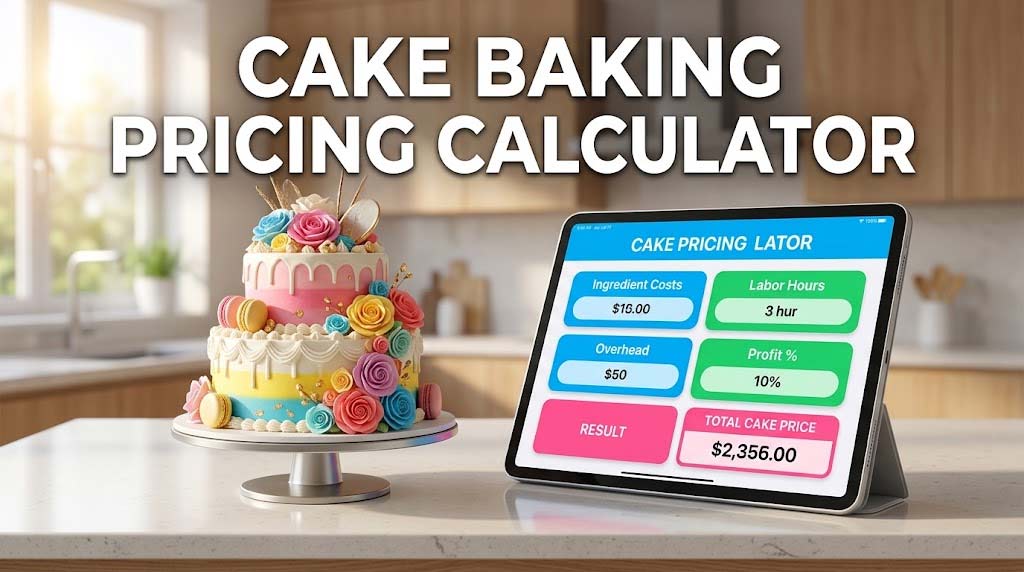
A Cake Baking Pricing Calculator is a useful tool for home bakers, professional cake designers, and small baking businesses that want to calculate a fair selling price for their cakes. Pricing a cake involves more than adding up the cost of flour, eggs, sugar, and other ingredients. Labor, decoration, packaging, overhead expenses, and profit should also be considered before setting the final price.
What Is a Cake Baking Pricing Calculator?
A cake pricing calculator helps estimate how much you should charge for a homemade or professionally decorated cake. By entering your ingredient costs, preparation time, labor rate, decoration expenses, packaging costs, and desired profit, you can create a more realistic selling price.
This approach is especially useful for small businesses where individual cake orders can vary significantly in size, design, ingredients, and preparation time.
Why Accurate Cake Pricing Matters
Many home bakers underprice their products because they calculate only the ingredient cost. Although ingredients are an important part of the total expense, they are not the only costs involved in producing a cake.
- Calculate Ingredient Costs: Estimate the actual cost of the ingredients used for each cake.
- Include Labor: Account for the time spent preparing, baking, decorating, and cleaning.
- Cover Overhead: Consider electricity, gas, equipment, kitchen supplies, and other operating expenses.
- Add Packaging: Include cake boxes, boards, ribbons, labels, and other packaging materials.
- Protect Your Profit: Add a reasonable profit margin instead of simply charging the production cost.
- Create Consistent Prices: Use a repeatable pricing method for different customer orders.
What Costs Should Be Included?
A good cake price should reflect both direct and indirect expenses. Direct costs are expenses directly associated with a particular cake, while indirect costs help keep the baking business operating.
| Cost Category | Examples | Why It Matters |
|---|---|---|
| Ingredients | Flour, eggs, butter, sugar, cream | Core production cost |
| Decoration | Fondant, flowers, toppers, colors | Varies by cake design |
| Labor | Baking, decorating, cleaning | Pays for your time and skill |
| Packaging | Box, cake board, labels | Protects and presents the product |
| Overhead | Electricity, gas, equipment | Supports business operations |
| Profit | Desired markup or margin | Helps make the business sustainable |
How to Calculate Ingredient Cost
Start by determining the quantity of each ingredient used in a cake and its corresponding cost. For example, if a bag of flour costs $5 and contains enough flour for several cakes, you should calculate the portion used for one cake rather than adding the entire purchase price.
The same method can be applied to eggs, butter, sugar, chocolate, cream, food coloring, and other ingredients. This produces a more accurate cost per cake.
Calculating the Cost of Cake Decoration
Decoration can significantly change the final price of a cake. A simple buttercream cake may require relatively inexpensive decorations, while a custom fondant cake with handmade figures, flowers, or detailed artwork may require considerably more materials and time.
Keep decoration materials separate from basic ingredients when possible. This makes it easier to price custom cake orders accurately.
Don’t Forget Your Labor Cost
Your time has value. A cake may take several hours when you include preparation, mixing, baking, cooling, filling, decorating, packaging, and cleaning.
One simple approach is to multiply the total working hours by your desired hourly rate. This prevents you from treating your own time as free labor.
Understanding Overhead Costs
Overhead refers to business expenses that are not always connected to one individual cake. These may include electricity, gas, kitchen rent, equipment maintenance, mixer usage, refrigeration, cleaning supplies, website costs, and marketing expenses.
You do not necessarily need to assign the entire monthly overhead to one order. Instead, estimate your average operating expenses and distribute them across your expected sales.
Packaging and Delivery Expenses
Professional packaging can add a meaningful cost to every cake. Cake boxes, boards, inserts, ribbons, stickers, and protective materials should be included in your pricing calculations.
If you offer delivery, keep delivery charges separate when appropriate. Distance, transportation costs, and delivery time can make a significant difference to the actual cost of fulfilling an order.
How Profit Margin Affects Cake Pricing
After calculating your total production cost, you need to decide how much profit you want to earn. Profit is what remains after covering the costs associated with producing and selling the cake.
For example, if your total cost is $30 and you want to earn $15 from the order, your target selling price would be $45. Your actual pricing strategy may vary depending on your market, product quality, competition, and business goals.
Example of a Cake Price Calculation
Suppose a custom cake has $18 in ingredients, $7 in decoration materials, $15 in labor, and $5 in packaging and overhead. The estimated total cost would be $45.
If you add a $15 profit, the suggested selling price would be $60. A cake pricing calculator makes this type of calculation faster and easier, particularly when you manage many different orders.
Custom Cakes Need Custom Pricing
Not every cake should have the same price. A basic birthday cake and a highly detailed wedding cake may use completely different amounts of ingredients, labor, decoration, and design work.
Consider creating different pricing levels such as basic, standard, premium, and fully customized cakes. This gives customers clearer choices while making your pricing process easier to manage.
Pricing Cakes for a Small Business
Small baking businesses should create a consistent pricing system instead of estimating every order from scratch. A standard formula can reduce mistakes and make it easier to prepare quotations for customers.
Good business organization also depends on communication and teamwork. The Workplace Teamwork Basics Course Online Free With Certificate can be relevant for people developing collaborative skills while building a growing business.
Keeping Cake Pricing Professional
A professional pricing system should be easy to understand and consistent across orders. Keep records of ingredient prices, labor time, packaging expenses, and previous sales so you can update your pricing when costs change.
If you operate a larger baking business, administrative skills can also help with order tracking, invoices, customer records, and expense management. The Office Administration Course Online Free covers skills that can support organized business operations.
Communicating Your Price to Customers
Customers may not always understand why a custom cake costs more than a standard cake. Clear communication can help explain what is included in the price, such as cake size, flavor, filling, decoration, packaging, and delivery.
Strong communication is especially important when discussing custom designs, deadlines, revisions, deposits, and additional charges. The Business Communication Skills Course Online is another useful resource for improving professional communication.
Common Cake Pricing Mistakes
- Charging only for ingredients.
- Ignoring the value of your time.
- Forgetting packaging expenses.
- Not accounting for electricity, gas, and equipment costs.
- Offering complex decorations without charging for additional labor.
- Copying a competitor’s price without calculating your own costs.
- Failing to update prices when ingredient costs increase.
Tips for Better Cake Pricing
Keep a record of every cake you make and compare your estimated costs with your actual expenses. Over time, these records can help you identify which products are most profitable and which designs require too much time for their current price.
It is also useful to review your pricing periodically. Ingredient prices, packaging costs, equipment expenses, and customer expectations can change as your business grows.
Using a Calculator for Different Cake Sizes
A cake pricing system can be adapted for different sizes and serving quantities. A larger cake generally requires more ingredients and may require additional decoration and preparation time.
Instead of using a simple price-per-pound or price-per-serving rule for every order, consider combining size-based pricing with decoration complexity and labor. This can produce a more accurate price for customized products.
Cake Pricing and Business Growth
Accurate pricing is an important part of building a sustainable baking business. When your prices properly reflect your costs and desired profit, you have more room to invest in better ingredients, equipment, packaging, marketing, and professional development.
Understanding food preparation and baking fundamentals is equally important. Resources from Wikipedia’s overview of cake provide general background about this popular baked product and its many variations.
Frequently Asked Questions
How do I price a homemade cake?
Calculate the cost of ingredients, decoration materials, labor, packaging, overhead, and other applicable expenses. Then add your desired profit to determine a reasonable selling price.
Should I charge for my baking time?
Yes. Your time is a business expense and should normally be included in your pricing. Calculate the hours required and multiply them by an appropriate hourly rate.
Should delivery be included in the cake price?
It depends on your business model. You can include a standard local delivery fee in the total price or list delivery separately so customers can clearly see the additional cost.
Why are custom cakes more expensive?
Custom cakes often require more design work, specialized ingredients, decoration materials, and labor. Handmade figures, intricate piping, fondant work, and personalized designs can significantly increase production time.
How often should I update my cake prices?
Review your prices whenever major ingredient, packaging, utility, or operating costs change. A regular review can help prevent your profit from gradually disappearing as business expenses increase.
Final Thoughts
A Cake Baking Pricing Calculator can make cake pricing easier, faster, and more consistent. The most useful pricing approach considers the complete cost of producing a cake rather than focusing only on ingredients.
Whether you are a home baker taking occasional orders or building a professional cake business, accurate pricing helps protect your time, cover your expenses, and create sustainable profit. By combining a reliable calculation method with good organization and clear customer communication, you can price your cakes with greater confidence.